
How to Start New Habits and Stop Old Ones

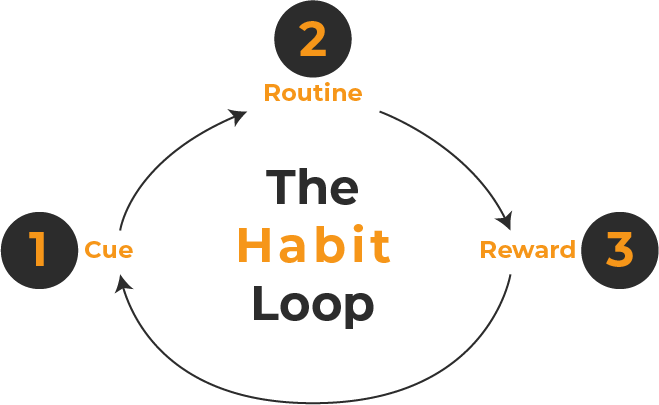
Habits are behavior that has become reflexive over time and often are a triggered response. It’s been found that habits start with psychological behavior called a “habit loop” which takes place in three parts. The first part is the trigger which causes us to begin to form the habit behavior. Then comes the continued routine of the habit, and finally the reward we feel from it. So how do we break away from the bad ones and create new ones?
Identify triggers
The best way to break a habit is to identify what triggers your habit. When you recognize your habits, you can break down what factors around you may be causing you to do the behavior. You’ll need to focus on why you want to change your habits. A study found that it may be easier to change your habits when you actually want change that is beneficial or valuable to you. With this, think about your habits and what that change would mean for you. It’s helpful to write this down or place reminders in areas you spend most of your time in as it keeps it fresh in your mind – and serves as a reminder if you find yourself falling back into old habits.
Replacing old habits with new ones
Another method you can use is to identify the habit you wish to change and replace it with a new habit. Once you are repeating a new behavior, you will begin to feel compelled to follow a new routine. The rewards of the new routine will follow shortly after. For example, if you wanted to become more active and decided to take a 30 min walk each day, you will eventually feel a boost in endurance, lose weight, and gain more mental clarity.
Practice your habit daily
If you’re wanting to start a new habit, the best way to do this is to do it every day. A study published in the European Journal of Social Psychology found that the amount of time for a task to become an automatic behavior ranged from 18- 254 days with the average being 66 days. In short, it takes quite a bit of time to form a habit but the more you do it you are more likely to stick to it.
However, there are some things you can do to make it a bit easier on yourself. First, it’s important that you reward yourself. However, depending on your new habit the rewards may take longer to reap. With this in mind, another critical factor to consider is to start small, and try easier habits. We are more likely to form new habits when we clear the obstacles that stand in our way. For example, if you’re wanting to go to the gym more, packing your gym bag and leaving it by the door makes you more inclined to go.
Changing habits and creating new ones is not an easy process – it calls for time and dedication to the desired change. The more you are educated on the process of habit making and how habit formation works, the more equipped you will be to tackle the process. It’s vital you take it easy on yourself during that process, and the more successful you will be.
Call For a FREE Consultation
We serve the Denver Metro area of Colorado. Click the button below to call and Schedule an Initial Consultation. To Schedule Neurofeedback or Testing please call us at 720-248-8603
Recent Articles
Dispelling Neurofeedback Myths
Neurofeedback has become increasingly popular as a therapeutic tool for clients, but it remains misunderstood by many. Misconceptions about its…

Autism Testing for Adults: Why Diagnosis Still Matters
What is Autism? Autism is a neurological difference that impacts how one scales social interactions, interpersonal relationships, and experiences the…

The Intersectionality of Autism & LGBTQIA Throughout the Lifespan
If you have a child (of any age) who you think may be Autistic, has been diagnosed as Autistic, or…

Autism Diagnosis Support Guide: Interventions, Therapy, and Accommodations for All Ages
Understanding Your Diagnosis An Autism or other mental health diagnosis may be very overwhelming. Understanding a diagnosis can help lessen…