Play Therapy: What it is and Who it helps
We often associate difficult emotions with adulthood and talk therapy. Like adults, children also struggle with difficult emotions; however, they don’t have the language we have as adults. But what happens when you don’t have the words or experiences to understand or verbalize what is going on?
This is where Play Therapy comes into the picture. Play therapy is to children, what talk therapy is to adults. Play is the language of children.
WHAT IS PLAY THERAPY:
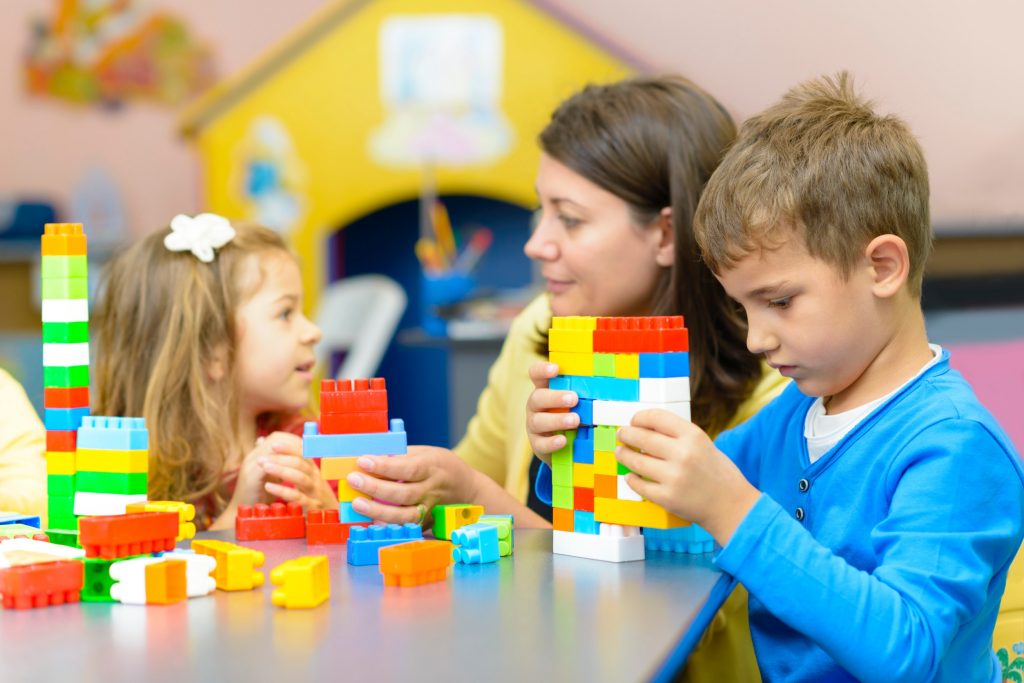
When children aren’t able to verbalize what they are feeling they may internalize these emotions which can lead to them acting out behaviorally. Play therapy is a popular method of treatment when working with young children. Play not only allows children to process through their difficult emotions, but it allows them to understand and learn new developmentally appropriate coping skills. Simply put, play allows them to process through their trauma or difficult emotions utilizing symbolic expression, where toys are their words and play is their language (1).
Play therapists strategically allow space for processing, and/or opportunity for learning and growth. Play therapy is not just playing with toys like a child does at home, but it is a therapeutic process that requires additional training on the part of the therapist. If you have a younger child that would benefit from counseling, it is important to choose a therapist who has training in play therapy.
Children are always observing and learning. They communicate through play and behaviors, and learn what is acceptable and unacceptable through the reactions from others toward their behaviors and actions. These behaviors are enacted and appropriately modeled through play in the therapy setting. Play therapy acts as a safe environment for children to not only process and learn new skills, but gain a sense of control in what can seem like an uncontrollable world. It supports independence, exploration, and builds self-confidence, self-esteem, and self efficacy. (1)
Play therapy facilitates communication, learning, and provides resolution. It has also been shown to reduce anxiety, depression, and support brain plasticity. (2) Play itself releases multiple neurotransmitters in the brain which help support mood regulation, motivation, and building trust.
WHO BENEFITS FROM PLAY THERAPY:
There is space for play in the therapy room for all ages. However, play therapy is particularly geared toward and effective with the ages of 3 – 12. When children come to counseling play therapy is considered best practice in helping them meet their goals! If you would like to learn more about play therapy, give us a call at 720-583-9332.
Written by Michele Flynn, MA
(1) Landreth, G. L. (2002). Play therapy: The art of the relationship. New York, NY: Brunner-Ruttledge.
(2) Schwartzenberger, K. (2007) Developmental play therapy in the treatment of childhood trauma. California Association for Play Therapy Newsletter, 18, 1-3.
(3) Bateman, C. & Nacke, L.E. (2010). The neurobiology of play. Proceedings of the International Academic Conference on the Future of Game Design and Technology. Futureplay, 10:1-8.
Call For a FREE Consultation
We serve the Denver Metro area of Colorado. Click the button below to call and Schedule an Initial Consultation. To Schedule Neurofeedback or Testing please call us at 720-248-8603
Recent Articles

How ADHD Can Impact Parenting Styles
ADHD in Adulthood ADHD (Attention-Deficit/Hyperactivity Disorder) does not disappear in adulthood. While ADHD is often associated with childhood, it continues…
Dispelling Neurofeedback Myths
Neurofeedback has become increasingly popular as a therapeutic tool for clients, but it remains misunderstood by many. Misconceptions about its…

Autism Testing for Adults: Why Diagnosis Still Matters
What is Autism? Autism is a neurological difference that impacts how one scales social interactions, interpersonal relationships, and experiences the…

The Intersectionality of Autism & LGBTQIA Throughout the Lifespan
If you have a child (of any age) who you think may be Autistic, has been diagnosed as Autistic, or…