
Anxieties’ Effects on Maternal Mental Health
What is Anxiety?
Everyone has felt anxiety at one point or another. Whether you have an important meeting for work, a big test, or an interview, anxiety is a completely normal human emotion. Anxiety is defined as “a common emotional state characterized by feelings of unease, such as worry or fear” (Mental Health UK). The symptoms of anxiety can vary from person to person, but most commonly look like excessive stress or worry, restlessness, tension, irritability, and a feeling of impending doom. Because of the fight or flight response to anxiety activities, there are also physical symptoms that can manifest. Physical symptoms often look like a rapid heart rate, trembling, uncontrollable sweating, and even difficulty breathing that can turn into hyperventilation.
 When anxiety is persistent, long-lasting, and extreme, it can turn from a normal emotion to a disorder. Living with an anxiety disorder can impact everything from the ability to complete tasks to digestive health. Key physical signs look like heart palpitations, chest pain, shortness of breath, headaches, muscle tension, inability to sleep or insomnia, fatigue, lightheadedness, nausea, and vomiting. Emotional side effects include an incessant sense of impending doom, a feeling of loss of control, and constant uncontrollable unease, dread, and worry. While the symptoms of anxiety and anxiety disorders are very similar, anxiety disorders are often debilitating and impact everyday life.
Understanding Anxiety Disorders
The most common anxiety disorders include Generalized Anxiety Disorder (GAD), Social Anxiety Disorder, Panic Disorder, and phobias. GAD is characterized by an ever-present fear of daily tasks and aspects of life. This can look like chronic concerns about family members, health issues, or financial loads that feel extremely difficult to manage and suppress. On the other hand, Social Anxiety Disorder is specifically defined by a fear of being ridiculed, judged, or embarrassed in social settings; this anxiety does not transfer to other aspects of life.
Moreover, Panic Disorder looks like recurring, sudden panic attacks which stem from intense fears combined with an onset of physical symptoms such as heart palpitations and hyperventilation. Lastly, there are phobias that are distinguished by an acute fear of specific environments, objects, or situations, and can trigger extreme anxiety or panic attacks. Today, we will be discussing Perinatal Mood and Anxiety Disorders (PMADs) and Antenatal Anxiety to see how anxiety disorders and anxiety as a whole impact maternal mental health and postpartum life.
Anxiety and Pregnancy
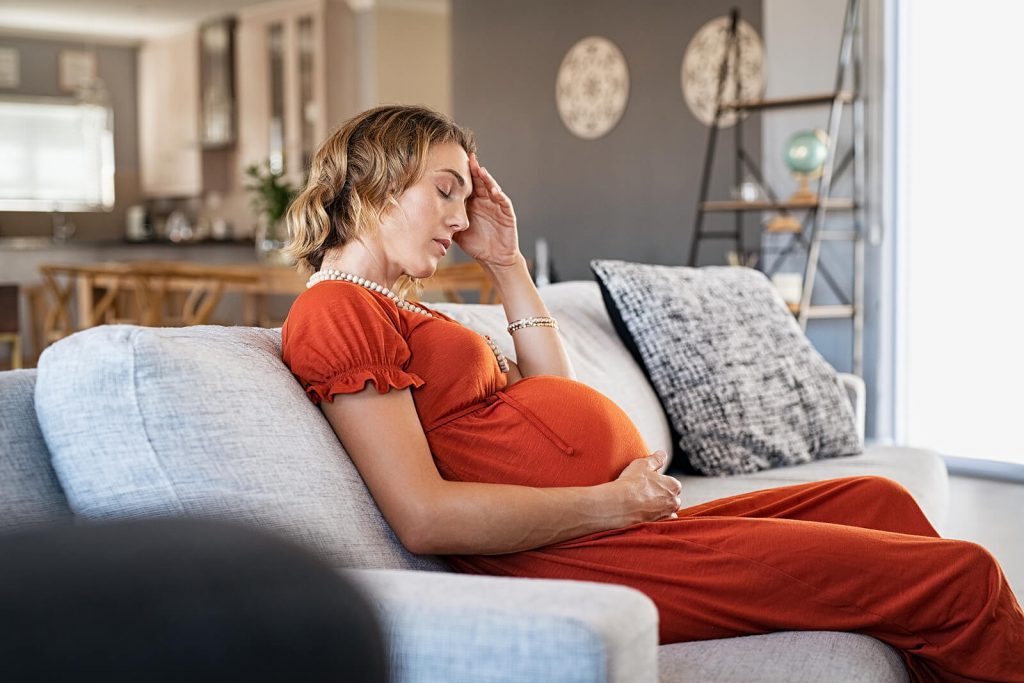
Pregnancy can be a very stressful time, full of new responsibilities and physical changes. Creating human life isn’t easy, and feeling anxiety during pregnancy is completely normal. In fact, more than 1 in 10 women experience anxiety during pregnancy (Brown Health). However, there is a difference between typical jitters and an anxiety disorder known as antenatal anxiety, which occurs when one’s anxiety crosses the line into extreme, constant, and all-consuming, often impacting day-to-day life. Antenatal anxiety can lead to difficulties and complications when expecting, which is why it’s crucial to not only reach out to mental health professionals but also to your doctor as well, so you can ensure the health of both you and your baby.
Not only does it impact the mother’s mental health, but it can have very real implications for the physical health of the mother and child alike. It has been known to increase the severity of pregnancy symptoms such as increased frequency of nausea and vomiting, particularly within the first trimester. Extreme anxiety while pregnant can also increase one’s risk of preeclampsia, which is a blood pressure disorder that occurs during the second half of pregnancy or after delivery. Antenatal anxiety has been linked to low birth weight and an increased risk of delivering before the 37-week gestation period. Anxiety during pregnancy can also have lasting effects on the brain development and stress responses of the fetus. This can lead to an increased risk of emotional and behavioral challenges later in your child’s life.
What Are the Impacts of Antenatal Anxiety Postpartum?
Unfortunately, the impacts of antenatal anxiety can often persist even after giving birth. The anxiety that is experienced during pregnancy, if not dealt with, can continue postpartum and even worsen or work in tandem with depression. If you are struggling with this, you are not alone; in fact, 1 in 7 cases of antenatal anxiety continues into postpartum life (Journal of Mental Health and Clinical Psychology). Because of this, mother-infant bonding can be prevented or impacted, which can lead to a disconnect between mother and child. Not only does this affect the child’s development, such as delayed mental development and emotional issues, but it can also lead to long-term attachment issues.
 The physical symptoms, including restlessness and lack of sleep, excessive stress and worry, and appetite changes, can remain and become an interference for the mother’s ability to care for both herself and the baby. In conjunction, the mother’s self-esteem can be impacted because she might feel as though she isn’t fulfilling her role as a mother properly or living up to societal expectations. This can further the impact on the mother’s mental health by adding another layer of mental strain. Increased irritability and anger are also common symptoms that can turn into apathetic or harsh parenting.
Why Can Antenatal Anxiety Occur?
Although any woman who experiences pregnancy is capable of developing anxiety disorders while pregnant, there are some women at a greater risk than others. It is important to acknowledge an increased susceptibility to developing antenatal anxiety to take preventative measures early on in, or even before, pregnancy. Those who have previously lived with anxiety disorders, depression, bipolar disorder, or other mental health challenges are at a much higher risk of antenatal anxiety.
Furthermore, those with a family history of mood disorders have a higher likelihood. Aside from predisposed conditions, having a history of trauma, abuse, or domestic violence, previous pregnancy complications, pregnancy loss, and fertility struggles also lead to an increased probability of developing antenatal anxiety. Lifestyle factors such as a lack of partner or community support, stressful life events, and pressure from work or home life are also important to consider. Postnatal Anxiety and depression’s impact is often not limited to the maternal-infant relationship, but it can seep into other aspects of life, including the ability to rejoin the workforce and relationships with family, friends, and, especially, partners.
How Can Antenatal Anxiety Be Treated and Avoided?
Antenatal anxiety is not something that can be predicted. Because of this, it is not possible to avoid it in its entirety. That being said, there are ways to decrease the risk of developing it or lessen the strain of it. Exercise is a great way to increase serotonin and decrease cortisol levels, which naturally decreases anxiety levels. However, speak with your doctor first to create a workout plan that is safe for you and your child. Making sure to eat and maintain a healthy diet without excessive amounts of caffeine, processed foods, sugar, and artificial ingredients is also essential for one’s physical and mental health alike.
Getting enough sleep also gives your brain time to rest and get respite from daily stressors and anxieties, which is why routinely getting enough consistent sleep is helpful. Taking time to slow down, rest, and put the health of you and your baby first can significantly decrease the risk of symptoms of antenatal anxiety. This can look like implementing meditation to release endorphins, daily deep breathing exercises, cutting down on household chores and responsibilities, and reaching out to friends and family for extra support.
One of the best ways to do so is by making sure you have a support system you can trust and rely on.
 Community is crucial to easing stress and taking a load off new and expecting mothers. Similarly, having a support group who is going through similar experiences can allow expecting mothers to feel seen and to better understand why they feel the way that they do. In severe cases, medication is also available, if approved and prescribed by a doctor. Getting mental health support through counseling or therapy is an effective way to cope with and learn how to manage antenatal anxiety.
Start Working With An Anxiety Therapist in Englewood, CO, Littleton, Greenwood Village, and Across Colorado
Through discussing your thoughts, feelings, and emotions with a licensed professional, you can not only better understand your feelings and where they stem from, but you can also be exposed to strategies such as cognitive behavioral therapy that have been proven to mitigate and lessen the impacts of anxiety. If you or a loved one is struggling with antenatal anxiety, here at Mountain Vista Psychology, we have licensed therapists qualified to help you navigate and understand these difficult and complicated feelings. Feel free to reach out to us if you are in need of professional support during this time. Start your therapy journey by following these simple steps:
- Contact us, call us at 720-583-9332, or email us at info@mountainvistapsychology.com!
- Meet with a caring therapist
- Start finding lasting relief from anxiety!
Other Services Offered by Mountain Vista Psychology
Support for maternal mental health isn’t the only service that our team offers in Littleton, Englewood, Hampden, and Greenwood Village. Our team provides a variety of services to support your mental health with in-person and online counseling. We are happy to offer a variety of mental health support, including ADHD therapy for children, teens, and adults. We also offer child counseling, teen counseling, adult counseling, family therapy, grief counseling, and therapeutic yoga. Other services offered include neurofeedback therapy, including targeted neurofeedback for ADHD, ADHD testing, anxiety, concussion/TBI recovery, and sports or performance enhancement. We also conduct evaluations for learning disabilities and Autism testing. Read through the Mountain Vista blog for helpful info!
Citations:
Anxiety During Pregnancy | Brown University Health. (2024). Brown University Health. https://www.brownhealth.org/centers-services/multidisciplinary-obstetric-medicine-service-moms/anxiety-pregnancy
Araji, S., Griffin, A., Dixon, L., Spencer, S.-K., Peavie, C., & Wallace, K. (2020). An Overview of Maternal Anxiety During Pregnancy and the Post-Partum Period. Journal of Mental Health & Clinical Psychology, 4(4). https://doi.org/10.29245/2578-2959/2020/4.1221
Mental Health Foundation. (2024). What Is Anxiety? Www.mentalhealth.org.uk. https://www.mentalhealth.org.uk/our-work/public-engagement/mental-health-awareness-week/anxiety-report/what-anxiety
Call For a FREE Consultation
We serve the Denver Metro area of Colorado. Click the button below to call and Schedule an Initial Consultation. To Schedule Neurofeedback or Testing please call us at 720-248-8603
Recent Articles

Evaluación psicológica infantil en español: qué deberías saber
Qué sucede en una evaluación psicológica infantil, desde la primera llamada hasta la sesión de resultados, en español.

What Happens During a Child Psychological Evaluation?
A step-by-step guide to child psychological evaluations, from the first call through the feedback session.

Niños bilingües: Cómo influye en su desarrollo saber dos idiomas
Cómo influye crecer con dos idiomas, qué observar más allá de las palabras y cuándo pedir orientación en Colorado.

Bilingual Children: What to Expect From Communication
What communication looks like in bilingual children, what to watch beyond word count, and when to ask for guidance.